




Aspect |
 Takt Time |
 Cycle Time |
 Lead Time |
|---|---|---|---|
| Focus | Aligning production with customer demand. | Measuring efficiency of a specific task. | Evaluating the entire process from order to delivery. |
| Scope | Entire production line. | Individual processes or machines. | Full order lifecycle, including non-production tasks. |
| Calculation | Based on available time and demand. | Based on task duration. | Encompasses all activities, including waiting times. |
| Improvement Goal | Prevent overproduction or underproduction. | Reduce time required for each operation. | Minimize delays and optimize workflow. |

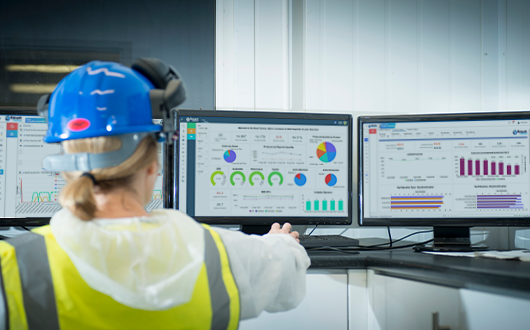

Smart Factory APS dynamically calculates and adjusts the schedules and production plan so that they coincide with the Takt Time, the lines must produce at a target pace based on delivery time and maintain breaks or production plan, accordingly, thus reducing overproduction. and staying adjusted to demand, planning adjustment can be made based on demand and expiration date, in addition to considering available time to balance production and on the one hand reduce the use for one product and achieve the delivery in another.

IIoT sensors detect downtime or excess production and notify operators to reduce the speed of the machine, so although the machine has the capacity to produce more, a decelerated pace is required, at some times, the specific resource for a different product and maintain its monitoring to avoid problems related to the execution of its process and achieve compliance with the production plan released (by the APS module) that is defined.

The MES system identifies workstations with extended cycle times through its data analysis in production dashboards, showing the supervisor possible stoppages to attend to and obvious delays in two of the three operating shifts.

The decision is made to generate E-SOPs that can provide real-time guidance and execution guidance to operators. These are designed based on the recommendations and actions of shift 3, which has best practices and better execution, thus standardizing them. the manual process of the operation without the need to carry out intensive training.

Through the IIoT system, the performance of the operator vs. the machine is monitored, suggesting calibration or maintenance needs for the equipment to reach the maximum operational capacity. This, together with the guided operation, solves the problem.

IIoT monitors the status of the machines and sends to the APS module all information on capacities, current usage, schedules and efficiency of the machines, ensuring that the machines arrive on time and the workstations function properly.

The information in the Smart Factory APS module is updated, new validation and addressing criteria are defined, and orders are dynamically rescheduled with APS rule adjustment to prioritize urgent customer requests, all using customer prioritization and delivery date. expiration as a target, thus obtaining a feasible schedule for delivery, organizing the product queue efficiently, finally, the materials explorer and shortage report provides what materials will be needed on what date and how to be able to organize and achieve the objective.

MES tracks the materials in real time, verifies the stock and in coordination with what the APS system orders, it can organize and define what is missing, when it should arrive and how it should enter to reach the goal.