

Smart Factory

Manufacturing Execution System (MES) Software

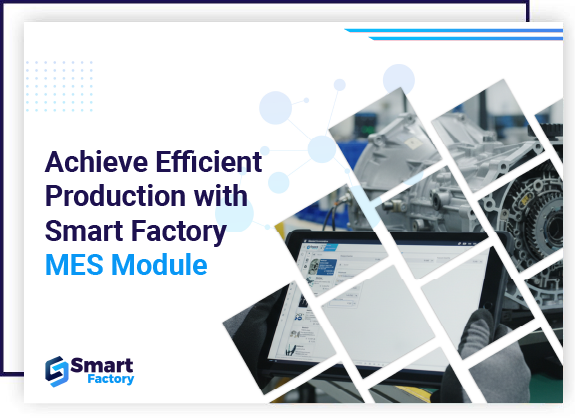
Smart Factory MES software facilitates manufacturers with full digital execution. This includes end-to-end execution from process monitoring, managing and tracking data, and controlling activities across the plant floor. The MES execution system helps manufacturers optimize operations and provides real-time shop floor visibility.

Real-Time Visibility with MES System for Manufacturing Operations

Real-Time Visibility at the Shop Floor for Smarter and Connected Manufacturing

The Smart Factory Manufacturing Execution System Software allows manufacturers to automate data collection from connected devices and get real-time production data insights for improved performance and efficient scheduling. Manufacturers get a comprehensive view of factory operations with the MES system to monitor real-time performance, identify production bottlenecks and their root causes, track work orders, maintain quality standards, and move ahead with data-driven decisions to lead to better business outcomes.

Track and control plant operations across the shop floor with real-time visibility into end-to-end production processes. The Smart Factory MOM cloud-based Manufacturing Execution System integrates seamlessly with your enterprise software and shop floor IIoT equipment (such as PLCs, sensors, and industrial controllers) or other manufacturing systems.

Smart Factory Manufacturing Execution System to Digitize Production Floor Operations

Explore the most impactful features of the Smart Factory MES system, built to enhance visibility, productivity, and compliance across your shop floor. These features will help you get control over production and drive efficiency.

Overall Equipment Effectiveness

Get a clear analysis of the effectiveness of equipment with a powerful OEE feature that offers dynamic calculation considering factors such as availability, performance, and quality. Optimize equipment to its maximum capacity using the OEE tool and improve the entire production process by gaining real-time visibility into data captured through machine, device, and sensor connectivity.

Overall Equipment Effectiveness

Quality Management System

Keep quality records in check at every manufacturing and distribution stage to stay compliant throughout the supply chain. Ensure quality control from receiving an item to the distribution of final finished goods with automated quality checks at multiple levels. Leverage automated quality control tests, inspection and checklist, NC-CAPA, vendor or supplier management, traceability, reports and analytics to meet industry, regulatory, and compliance requirements.

Key Features of Cloud-Based Manufacturing Execution System

Real-Time Production Tracking

Monitor production orders, operations, and shop floor activities in real time. Gain instant visibility into job progress, delays, and overall execution status.

Digital Work Instructions

Enable operators with step-by-step, response-driven work instructions to ensure consistent and error-free execution across shifts and teams.

Shop Floor Data Collection

Capture production data directly from machines and operators, eliminating manual entries and improving data accuracy and reliability.

Production Planning

Ensure seamless execution of production plans by connecting MES with scheduling systems. Track actual performance against planned targets.

Downtime Tracking & Analysis

Record machine stoppages with reasons and duration to identify recurring issues and reduce unplanned downtime.

End-to-End Traceability

Track materials, processes, and finished goods across the production lifecycle, ensuring complete visibility and compliance.

OEE Integrated

Measure availability, performance, and quality in real time through integrated OEE insights to drive continuous improvement.

QMS Integrated

Perform quality checks during production with built-in inspection workflows, ensuring defects are detected early, and compliance is maintained.

Operator & Resource Management

Manage workforce allocation, track operator activities, and ensure the right skills are aligned with the right tasks.

Alerts & Escalations (Andon System)

Enable real-time alerts for production issues, allowing quick response and minimizing disruptions on the shop floor.

Key Benefits of Smart Factory MES Software

Power your factory performance with Smart Factory MOM Manufacturing Execution System software, which boosts productivity, reduces downtime, and gains real-time control over your manufacturing.

Enhanced Quality Control

Achieve quality and compliance requirements with electronic documents, instructions, and quality procedures at every step of the production process, ensuring the delivery of high-quality products consistently.

Paperless Shop Floor

Eliminate manual and paper-based work on the shop floor with a cloud MES solution, automating workflows to complete jobs and work orders, leading to enhanced production and cost efficiency.

Improved Traceability and Genealogy

MES systems enable the tracing of movement from raw materials to finished goods and their genealogy, allowing manufacturers to comply with strict industry regulations.

Increased Productivity

With a streamlined execution process, the manufacturing unit is capable of generating better output and using the resources to their maximum capacity, resulting in higher OEE.

Reduced Cost

Without unnecessary delays and quality issues, the MES system avoids scrap work and rework to a great extent. Overall minimized scrap work and maximized resource utilization save overhead costs.

Agile Execution

A cloud-based MES system automates most of the execution tasks leading to greater flexibility in production processes and faster response times.

MES

Optimize your Production Process with Smart Factory MOM MES Module

Take your production to the next level, with our MES module, that provides real-time insights into your production process. This enables manufacturers to optimize resource utilization, reduce costing, and increase efficiency.

Gains Through MES Production Software: MES Metrics

Reduce Lead Times

50%

Reduce Lead Times

Increase Productivity

30%

Increase Productivity

Reduce waste

90%

Reduce waste

Improve compliance

80%

Improve compliance

Challenges Smart Factory Manufacturing Execution System Solves

one

Production Efficiency

With real-time visibility into production information and execution sequencing, MES automates the execution based on APS order and optimizes resource allocation accordingly with digital twin logic.

two

Inventory Accuracy

MES enables manufacturers to track inventory in real-time, providing accurate inventory management while avoiding overstocking and material shortages.

three

Quality Control and Compliance

Traceability of material movements, identify early deviations, and implement quality procedures to ensure industry, regulatory, quality, and compliance requirements are met.

four

Document Control and Cost Management

Eliminates data silos and redundancy with automated data capture. MES minimizes waste by optimizing resource utilization and production, resulting in cost savings.

five

Integration With Manufacturing Systems

The Smart Factory MES solution seamlessly integrates with existing manufacturing ERP systems, PLCs, and IIOT devices to enable unified operations and capture accurate information.

Ready To See Smart Factory MOM in Action?

Transform your manufacturing business with Smart Factory MOM solutions. Request a demo to see Smart Factory MOM, a robust smart manufacturing software in action.

FAQs

A Manufacturing Execution System (MES) software enables manufacturers to monitor, document, and track their production processes. It automates the data collection process, bridging the gap between the shop floor and other manufacturing systems. The information gathered through the MES system provides real-time visibility of shop floor operations, enhancing production efficiency and factory performance.

Yes, OEE (Overall Equipment Effectiveness) is considered a KPI within MES. OEE is a distinct concept, but it is part of a comprehensive MES system that measures the equipment’s overall efficiency based on its availability, performance, and quality.

Highly regulated industries that need to take control of their production processes, gain real-time visibility, automate data collection, and implement automated quality procedures utilize MES. Industries that widely utilize MES include food and beverage, automotive, aerospace, chemicals, electronics, pharmaceuticals, and others.

To start with MES, define the objective of implementing MES and assess the process considering various factors, such as existing manufacturing systems, current workflows, and infrastructure. Select the right MES software that is a best fit for your business, implement the software, and monitor the system for continuous improvements.

The MES (Manufacturing Execution System) operates at a higher level to provide a comprehensive view of operations, offering actionable insights across the entire plant, whereas a PLC (Programmable Logic Controller) operates at a machine level to monitor and control equipment and machines. MES integrated with PLC enables manufacturers to provide real-time data and make informed decisions.

MES implementation timelines vary based on factors such as the company’s size, complexity, existing process, and migration requirements. Implementation of small and simple manufacturing companies could take 3 to 6 months whereas the mid-sized and large enterprises could take 6 to 12 months or even more depending on the custom requirements.

The cost of implementation of MES could range from a few dollars to even Thousands of dollars depending on the project size. The various factors involved in the MES implementation include subscription/licensing model, number of users, company size, custom development, integration needs, and more.

The short answer is Yes; it is possible for an MES system to connect to various types of platforms (enterprise or business). However, since no single MES platform natively connects to all enterprise systems on the market, it is common for MES platforms like Smart Factory to offer seamless, out-of-the-box communication and integration with the most common ERP and SCM platforms. Simultaneously, they support custom integrations with other systems as needed, thanks to integration architectures based on open integration principles (using APIs, exposed data points, and dynamic connectors).

Smart Factory
Privacy Overview

This website uses cookies so that we can provide you with the best user experience possible. Cookie information is stored in your browser and performs functions such as recognising you when you return to our website and helping our team to understand which sections of the website you find most interesting and useful.